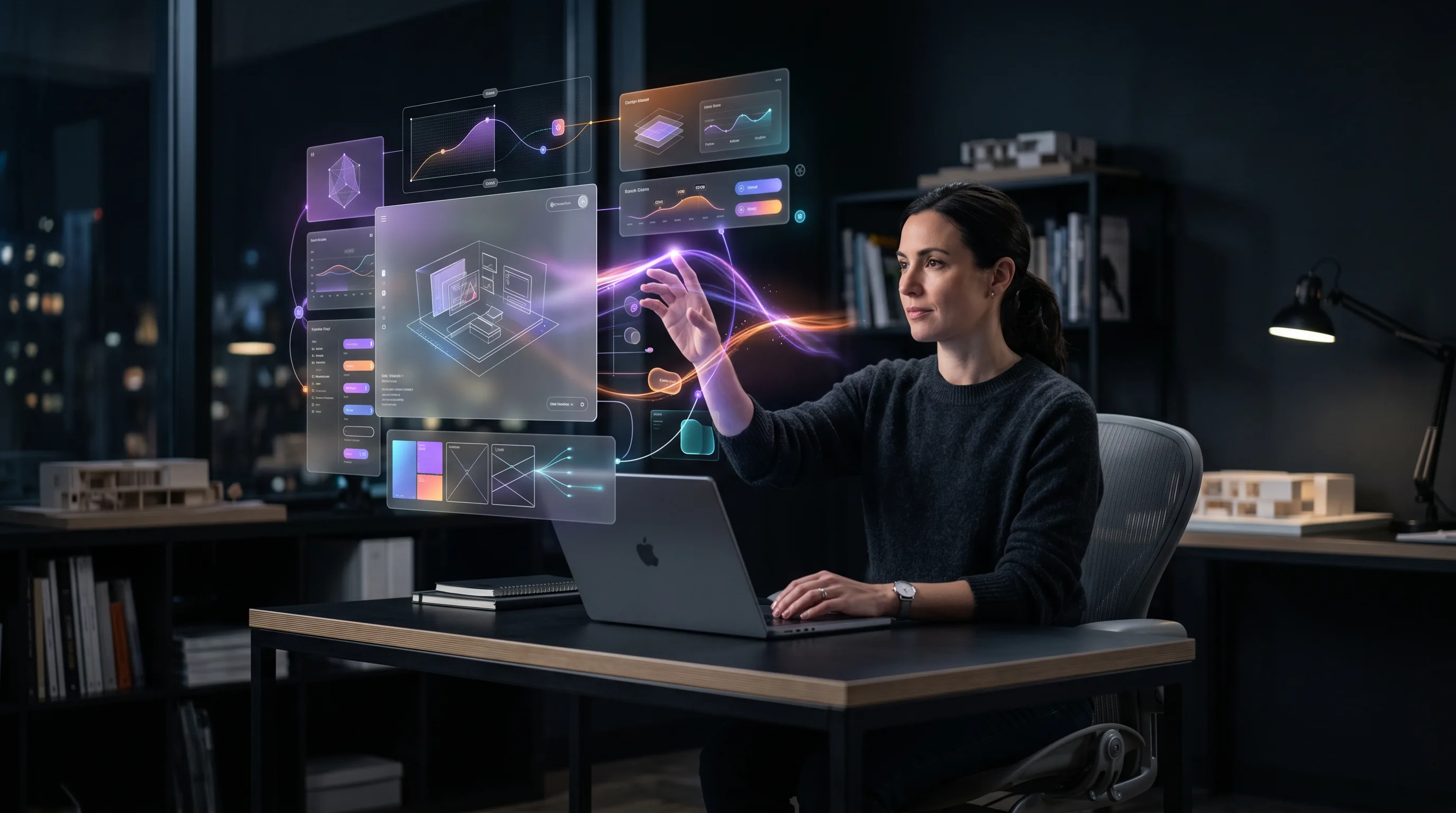
The Vision Pro launch marked a turning point: spatial computing moved from science fiction to consumer reality. But designing for 3D environments requires abandoning decades of flat-screen assumptions and embracing entirely new interaction paradigms.
The biggest challenge isn't technical - it's conceptual. Our design vocabulary is built around windows, buttons, and menus that exist on flat surfaces. In spatial computing, interfaces can float in mid-air, wrap around objects, or respond to gesture and gaze in ways that have no screen-based equivalent.
After spending months prototyping spatial interfaces, I've learned that successful 3D design starts with understanding human spatial cognition. People navigate physical spaces differently than digital ones, using landmarks, depth cues, and spatial memory that traditional UIs ignore.
Comfort is paramount in spatial computing. Interfaces that require uncomfortable head movements, eye strain, or unnatural gestures will fail regardless of their visual appeal. Design for the human body, not just the technology's capabilities.
Accessibility becomes more complex but also more important in 3D environments. Consider users with limited mobility, vision impairments, or spatial processing differences. The same principles of inclusive design apply, but require new implementation approaches.
Start designing for spatial computing by understanding the unique affordances: infinite canvas space, natural gesture input, eye tracking, and the ability to anchor digital content to physical objects. But resist the temptation to use every capability - the best spatial interfaces feel effortless, not overwhelming.
The future of spatial computing isn't about replacing screens entirely, but about knowing when 3D interaction genuinely improves the user experience versus when traditional interfaces remain superior.